Highly rated

Cove
Underwritten by Vero Insurance New Zealand Limited
Get Quote Goes to Cove
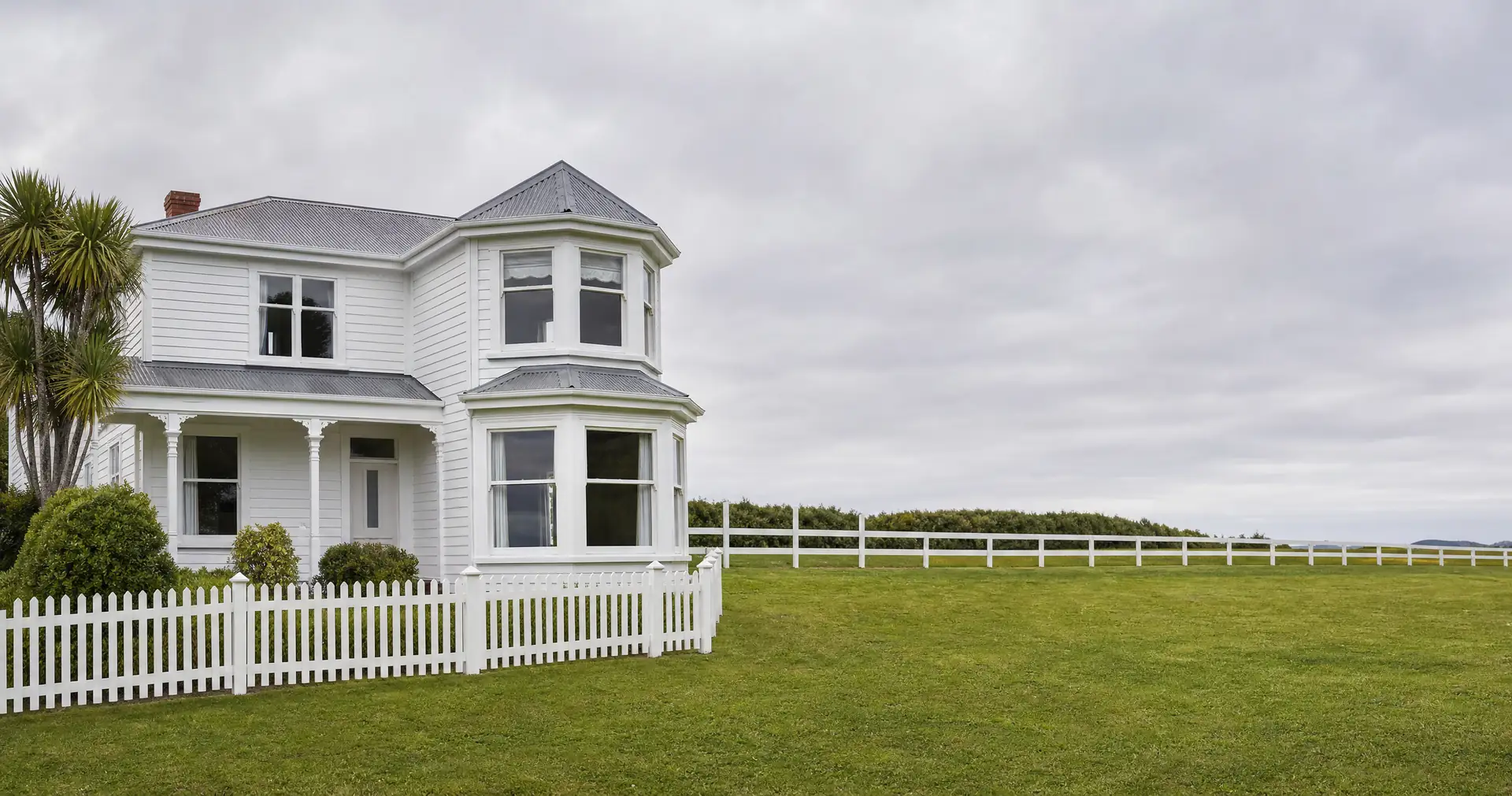
House insurance covers the building and the things around it, like fences and the garage. Nearly every claim that goes wrong in New Zealand comes down to one of three things. The sum insured was too low. Something was not told to the insurer. Or the damage happened slowly instead of all at once. This page covers all three.
The short version
Every brand you can buy cover from here.
Highly rated
Cove
Underwritten by Vero Insurance New Zealand Limited
Highly rated

AA Insurance
Carries its own risk

AMI
Underwritten by IAG New Zealand Limited
FMG
Carries its own risk

Initio
Underwritten by NZI, a business division of IAG New Zealand Limited

MAS
Carries its own risk

NZI
Underwritten by IAG New Zealand Limited

State
Underwritten by IAG New Zealand Limited

Tower
Carries its own risk

Trade Me Insurance
Underwritten by Tower Limited

Vero
Carries its own risk
Ratings are curated from a number of sources, including Google, Feefo and Trustpilot. They may not be completely up to date. They measure what reviewers said about dealing with a company, which is not the same thing as what its policy covers, and a brand shown as not rated is one we hold no reviews for rather than one that scored badly.
Highly rated rows appear first and are marked. Every other brand is listed alphabetically. Nothing in this table is ordered by how good the cover is, and no figure here is our assessment of any insurer.
What you are insuring
House insurance covers the structure. That is the roof, the walls, the floors and the fittings attached to them, along with the fences, decks, driveways and paths around it.
What it does not cover is anything you would take with you. Furniture, appliances and clothing belong on a contents policy, which is a separate product and outside what this site covers.
What is insured
A house policy covers the house itself and everything fixed to it. The roof, the walls and floors, the wiring and pipes inside them. The kitchen and bathroom fittings that are attached rather than free-standing. It usually covers the built things around the house too. Fences, decks, garages, carports, sheds, driveways, paths, retaining walls and in-ground pools. A lot of value hides in that list.
Those outside structures matter more than they look. They are the part people forget when working out a sum insured. A long driveway on a slope. Retaining walls. A full boundary of fencing. Together they can be a big share of what it costs to put a property back. None of it comes to mind when you are picturing the house.
The other thing people miss is the cost of the rebuild itself, not the building. Clearing the damaged site. Getting rid of the rubble. Paying architects, engineers and consent fees. Those are real costs, and they come out of the same sum insured as the house.
The dwelling
Structure and fixtures
Around it
Fences, decks, drives
The process
Demolition and fees
The limit
Your sum insured
The events
Policies cover sudden, accidental damage from a set list of events. Below is what New Zealand house policies usually include. Every policy is a bit different, and the document you are given is the one that pays your claim.
The oldest risk there is, and still the one that destroys whole houses. Smoke damage without flames is usually covered too, though not always to the same extent.
Sudden weather. If a property has flooded before, or sits in a known flood zone, the cover on offer can narrow a lot. That is why you get asked at quote time.
Shared with the Natural Hazards Commission. Your insurer collects the levy, takes the claim and runs it, so you only deal with one company.
Water bursting out is covered. Water slowly seeping is not, though most policies have a small hidden leak benefit with its own limit.
Cars, falling trees, aircraft and vandalism. Vandalism cover is one of the first things to shrink once a home is rented out or empty.
Somewhere else to live while your home cannot be lived in. There is a dollar limit and a time limit.
The number this site will not give you
This site publishes no rebuild costs and no sum insured figures, and it does not guess at one. A number produced without seeing your house is just a guess. Acting on a guess is how people end up underinsured. Every big New Zealand insurer has a free rebuild calculator, and most use the same cost data. For anything out of the ordinary, get a valuation instead. That means older homes, unusual construction, hard access, heritage features, or a lot of retaining. A registered valuer or a quantity surveyor gives you a figure you can stand behind.
Two layers
Natural hazard cover in New Zealand runs through the Natural Hazards Commission Toka Tū Ake. It used to be called EQC. Cover applies automatically to any house with private fire insurance. Your insurer collects the levy inside your premium, so there is no separate bill.
The Commission pays the first chunk of natural hazard damage to the house. It also covers some damage to the land right around it. Land matters, because your own policy usually does not cover it at all.
Damage above the Commission’s cap is your insurer’s to pay, up to your sum insured. You only make one claim. Your insurer sorts out both parts, so the split is their paperwork rather than yours.
The caps, the land rules and the levy are set by law and they change. That is why they are not listed here. The Commission publishes the current ones at nhc.govt.nz.
What happens
01
Address, year built, floor area, number of storeys, and what the walls and roof are made of. Insurers can look a lot of this up and often fill it in for you. The answers you confirm are the ones that count.
02
Behind the form is a set of rules. Flood and earthquake risk. How close to the coast. What it is built of. How easy it is to reach. How old it is and what condition it is in. Those rules decide whether you get a price straight away, get sent to a person, or get turned down.
03
Past claims at the address. Any cover that has been turned down or cancelled. Building work, and whether it was consented. Damage that is already there. This is the part where later claim arguments usually start.
04
You give them the figure, usually after running their rebuild calculator or getting a valuation. It caps what the building claim can pay. It is worth another look at every renewal.
05
A bigger excess usually means a lower premium. Natural hazard claims often have their own separate excess. Optional extras differ between insurers and are priced one by one.
Where it goes wrong
These are the recurring patterns rather than an exhaustive list, and how any individual insurer responds depends on their wording and the facts.
A figure that was fine when you took the policy out can fall a long way behind. Building costs rise. You renovate. You add a deck and a garage and never update the number. The sum insured is a ceiling, so the gap only shows up when the house is destroyed. That is the worst possible moment to find out.
What happens:The policy pays to its limit and the shortfall sits with the homeowner.
Rot behind a shower. A slow leak inside a wall. Corrosion that built up over years. None of that is a sudden event. Most policies have a small hidden leak benefit for water pipes. It has its own low limit and its own conditions.
What happens:Cover is limited to the gradual damage benefit, where the policy has one at all.
Building work without consent. A past claim. A stretch where the house sat empty. A drainage problem you knew about. The Contracts of Insurance Act 2024 changed how this duty works for everyday policies. The basic point has not changed. An insurer prices what it was told.
What happens:A claim can be reduced, or the policy treated as if it had never been on risk.
None of this is a prediction about your policy. What an insurer can actually do is set out in the policy document. For everyday policies it is also limited by the Contracts of Insurance Act 2024 and the Fair Insurance Code.
Who writes it
Listed A to Z. The order means nothing and we do not rank insurers. Cove is the brand we refer people to, and we say so on every page.
Standalone houses
One of the larger direct writers, with its own rebuild calculator.
Read onStandalone houses
Part of IAG, alongside State and NZI.
Read onBuying online
An insurance brand rather than an insurer, built around quoting and managing cover online.
Note:Our referral partner
Read onStandalone houses
Direct writer, also part of IAG.
Read onRisk-based pricing
Prices flood and seismic exposure at an individual property level.
Read onCover and limits differ between these insurers, and they change. Nothing here says any of them is better or cheaper than another.
FAQ
No, and they are commonly a long way apart. The sum insured is the cost of rebuilding the house as it stands, including demolition, site clearance and professional fees. Market value includes the land and reflects what a buyer would pay, which is driven by location as much as by the building. A rating valuation is a third number again, produced for council rating purposes on a mass-appraisal basis. Only the rebuild cost is relevant to a building claim.
The homeowner does. New Zealand moved away from open-ended replacement cover after the Canterbury earthquakes, and policies are now written to a stated sum insured. Insurers make rebuild calculators available and will accept a valuation from a registered valuer or a quantity surveyor, but the figure that appears on the policy schedule is the policyholder’s, and it is the maximum the building side of the policy will pay.
No. A house policy covers the building and the structures fixed to the property. Furniture, appliances, clothing, electronics and other belongings are covered by a separate contents policy, which is a different product with its own sum insured. Many insurers sell the two together and bundle the administration, but they remain two policies with two limits.
The Commission covers a first portion of natural hazard damage to a home, and it also covers some of the land around it, which private house policies generally exclude entirely. Cover is automatic for any home carrying private fire insurance, and the levy is collected by the insurer within the premium. Above the Commission’s cap, the private policy responds up to the sum insured. Current caps and land cover rules are set by legislation and published at nhc.govt.nz.
Usually not as ordinary damage, because insurance responds to sudden and accidental events rather than to deterioration. Many New Zealand wordings do include a limited hidden gradual damage benefit for water escaping from pipes inside the building, typically with its own limit and conditions such as a requirement that the leak was not reasonably detectable. Whether a particular leak falls inside that benefit turns on the wording and the facts.
It can. Unconsented or uncertified work is something a prudent insurer would generally want to know about, so it falls within the disclosure duty, and some wordings exclude or limit cover for damage arising out of the non-compliant work itself. Insurers vary in how they treat it, and a great deal depends on the nature of the work. Disclosing it at quote time is what preserves the position either way.
Cover through the period between signing and settlement is a question the sale and purchase agreement addresses, and the standard agreement used in New Zealand allocates risk between the parties. In practice both a seller and a buyer commonly hold cover across that window. It is a point worth confirming with the solicitor handling the conveyance rather than assuming, because the answer depends on the terms of the particular agreement.
Excesses generally apply per claim event rather than per policy period, so two unrelated events in a year usually attract two excesses. Many policies also apply a separate, and often larger, excess to natural hazard claims, and some apply specific excesses to particular perils or to properties with certain characteristics. The schedule issued with a policy lists the excesses that apply to it.
Related
Landlord insurance
What changes when tenants live in the house.
Read onHoliday home and bach
Cover written around a house that stands empty.
Read onWhat sum insured means
The number that caps a building claim.
Read onThe Natural Hazards Commission
The layer that sits under every house policy.
Read onFind your cover type
Three questions, no figures.
Read onReferences
Natural hazard cover, caps, land cover and the levy.
The Fair Insurance Code and industry-level claims data.
Finding a registered valuer for a rebuild valuation.
Quantity surveyors, for rebuild cost assessment on non-standard buildings.
The current statutory framework for disclosure in consumer insurance contracts.
Disclaimer
Home insurance is one of the few contracts most households hold for decades and read once. What a policy covers, what it excludes, and what has to be disclosed before it starts all vary between insurers and between versions of the same product, and the wording is what settles a claim. This site explains how the cover generally works so those conversations start from a better place. It is not a substitute for the policy document.
What this site is
An information site about insuring a home in New Zealand. Not an insurer, not a broker, not a registered financial adviser. Nothing here is personalised financial advice or a recommendation about any particular property.
What this site does not do
It publishes no premiums, no rebuild costs and no sum-insured figures, and nothing here estimates one. Those numbers come from an insurer's own calculator or a registered valuer, and getting them wrong is what underinsurance is made of.
What the insurer decides
Whether cover is offered, on what terms, at what price and with what exclusions is decided by the insurer, on the information given to them about the specific property.
Our relationship with Cove
This site refers people to three insurance brands. Cove for most homes, FMG for farms and lifestyle blocks, and AA Insurance for apartments. We receive no commission, fee or payment for any of those referrals, and nothing on this site is sold. No brand can buy a position, a badge or a mention. We are not an insurer, not a broker, and not a registered financial adviser. Nothing here is a recommendation that any brand is right for any particular home. Full disclosure on the partner page.
The policy wording decides
Every description of cover on this site describes what that type of cover generally does, not what any particular policy does. Limits, excesses, exclusions and conditions differ between insurers and change between versions, and the wording issued with a policy is the document that settles a claim.
Four questions, no figures
Nothing you choose here is sent anywhere or stored. Open this as a page instead.